
A dental checkup is one of the simplest appointments you can put on your calendar, but it does a surprising amount of work. It catches small problems while they are still small, keeps your gums and enamel in good shape, and gives you a dedicated moment to ask about anything that has been nagging at you, from a sensitive tooth to a chipped edge you keep running your tongue over.
If you have moved to the area recently, changed insurance, or it has simply been a while since your last visit, knowing what happens step by step takes most of the uncertainty out of the appointment. North Wales, PA sits in Montgomery County near Montgomeryville and Lansdale, and the local dental community covers a broad range of care. Offices around here describe themselves as offering preventive, cosmetic, restorative, family, and emergency dentistry, and many are actively accepting new patients. That leaves you with real choices about where to go, and it also means you can expect a fairly consistent rhythm from one office to the next.
What Happens at the Beginning of a Checkup
The first part of the visit is usually the least clinical. Someone at the front desk confirms your information, and a team member walks you back and gets you settled. Before anyone looks in your mouth, you will typically go through a health history update. That conversation matters more than it sounds like it does, because your mouth does not exist separately from the rest of you.
Expect to be asked about:
- New medications, supplements, or allergies since your last visit
- Recent diagnoses such as diabetes, heart conditions, or autoimmune issues
- Pregnancy or changes in hormone-related health
- Jaw pain, clicking, headaches, or clenching and grinding
- Sensitivity, bleeding gums, bad breath, or teeth that feel loose
- Any treatment you had elsewhere since you were last seen
If you are a new patient, this intake tends to be longer, since the office is building a baseline record from scratch. Bringing a list of your medications and your insurance card saves time and prevents guesswork. If you have records or images from a previous dentist, those help too, though many offices will simply take their own.
The Clinical Exam: Teeth, Bite, and Soft Tissue
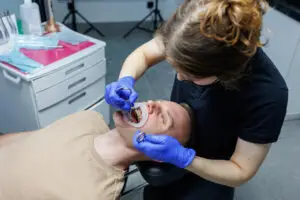
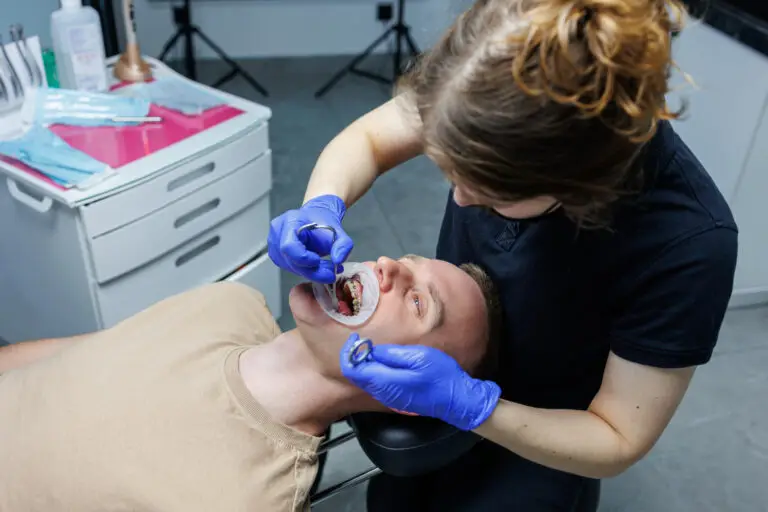
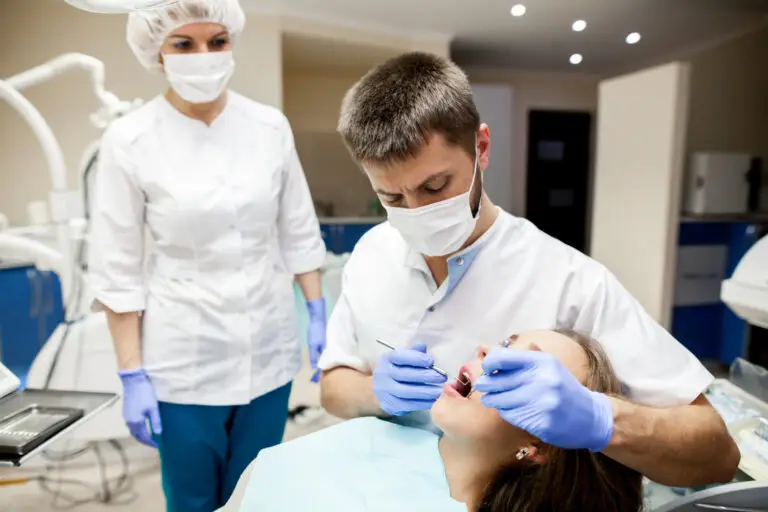
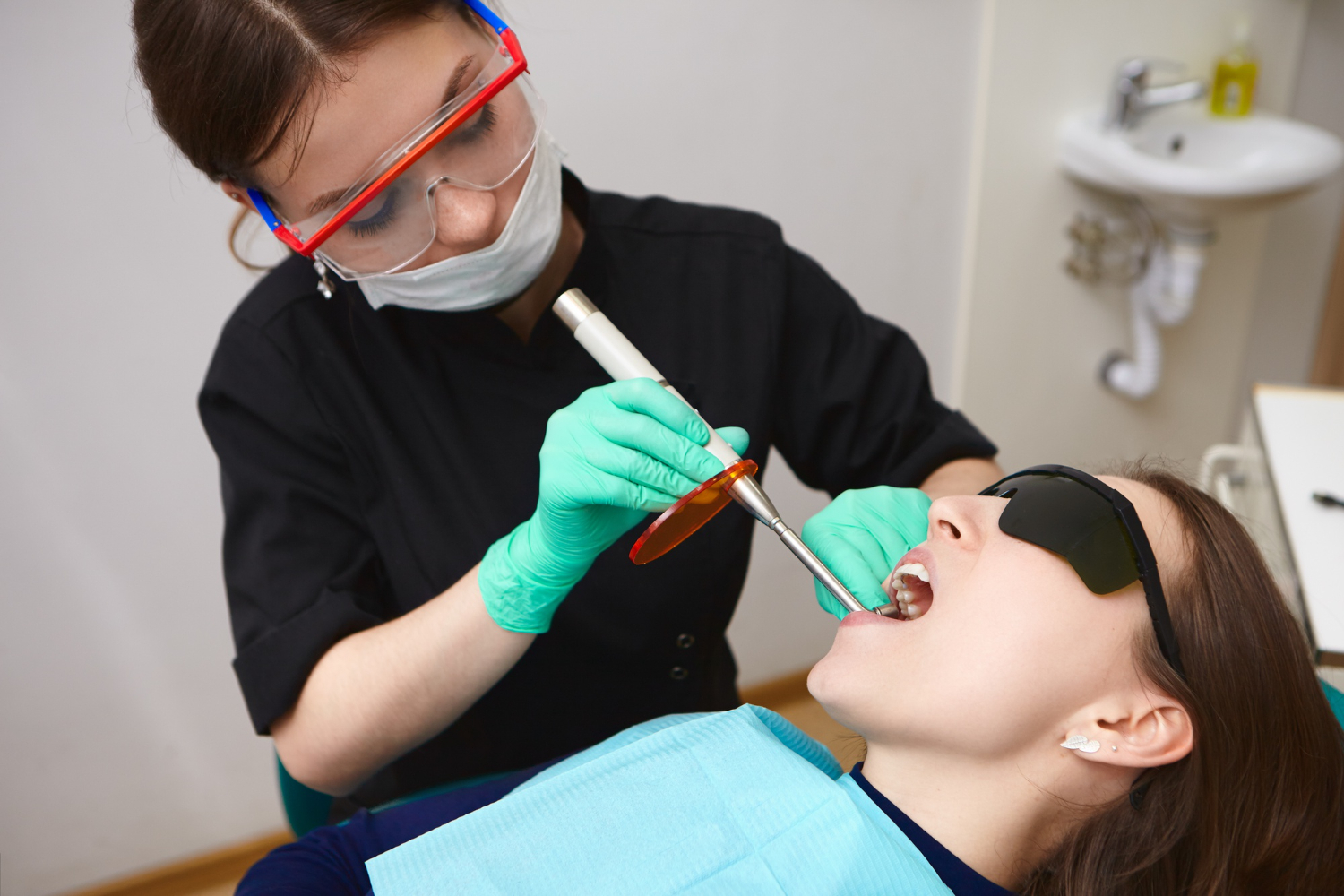
Once your history is current, the dentist examines your teeth one by one. They are checking the surfaces you can see and the ones you cannot, looking at the condition of existing fillings, crowns, and bonding, and feeling for rough edges, cracks, or areas where a restoration is starting to fail. A small mirror and a probe do most of this work, and it is usually quick and painless.
The exam goes beyond teeth. A thorough check includes your bite and how your upper and lower teeth meet, your jaw joint and its range of motion, and the soft tissues: gums, tongue, cheeks, the roof of your mouth, and the back of your throat. Dentists are trained to notice changes in these areas, and a routine visit is often where something unusual first gets flagged simply because someone is looking closely.
Signs of grinding or clenching often show up here too. Flattened chewing surfaces, tiny fractures along the edges of front teeth, and a tired jaw in the morning all point in that direction, and they are worth mentioning even if nothing hurts yet.
Gum Health and Periodontal Screening
Gum health gets its own portion of the appointment because it drives so much of what happens to your teeth long term. During a periodontal screening, the dentist or hygienist uses a small measuring instrument to check the space between each tooth and the gum tissue, looks for bleeding, and notes any recession or areas where the gum has pulled away from the tooth.
What they find shapes the rest of your visit. Mild inflammation may mean a standard cleaning and a reminder about flossing technique. Deeper pockets or significant bleeding may point to gum disease that needs a different kind of treatment, often scheduled as a separate appointment. This is also why the interval between your checkups is not identical for everyone. Someone with healthy gums and no history of decay may be fine on a longer schedule, while someone with a history of gum disease may be seen more often. Your dentist can tell you which group you fall into and why.
Professional Cleaning and Polishing
The cleaning is usually handled by a hygienist, and it is the part most people picture when they think about a checkup. Using hand instruments and an ultrasonic scaler, the hygienist removes plaque and hardened tartar from above and just below the gumline, including the tight spaces between teeth that a toothbrush struggles to reach. Once the deposits are gone, your teeth are polished with a gritty paste, flossed, and sometimes finished with a rinse.
If it has been several years since your last cleaning, expect more time and possibly more than one visit. Heavy buildup does not come off comfortably in a single session, and a hygienist would rather work carefully in stages than rush through and leave you sore. Speak up if you are nervous about discomfort. Many offices offer options to keep you comfortable, and letting the team know in advance is far better than white-knuckling it in the chair.
X-Rays and Other Imaging
Not every checkup includes X-rays. Dentists base the decision on your symptoms, your decay history, and how long it has been since your last set of images. Bitewing images show the areas between teeth where cavities like to hide, while larger images capture roots, the jaw, and wisdom teeth that have not yet come through.
Tell the team if you are pregnant or think you might be, and mention any recent imaging taken elsewhere so it does not get repeated unnecessarily. If you are unsure why a particular image is being recommended, ask. A quick explanation of what the dentist is looking for is a reasonable request and most offices are happy to give it.
Talking Through What the Dentist Found
After the exam and cleaning, the dentist sits down with you and goes over the findings. This conversation is where the visit turns from inspection into planning. You should expect to hear what looks healthy, what is being watched, and what, if anything, needs treatment now rather than later. Many offices will pull up your images on a screen so you can see the same thing they are seeing.
If treatment is recommended, ask for the reasoning. A good answer will explain what happens if you treat it, what happens if you wait, and how urgent it really is. Some findings are genuinely time sensitive. Others can be monitored at the next visit without risk. Knowing which is which helps you make a decision you are comfortable with rather than one made under pressure.
If You Need More Than a Cleaning
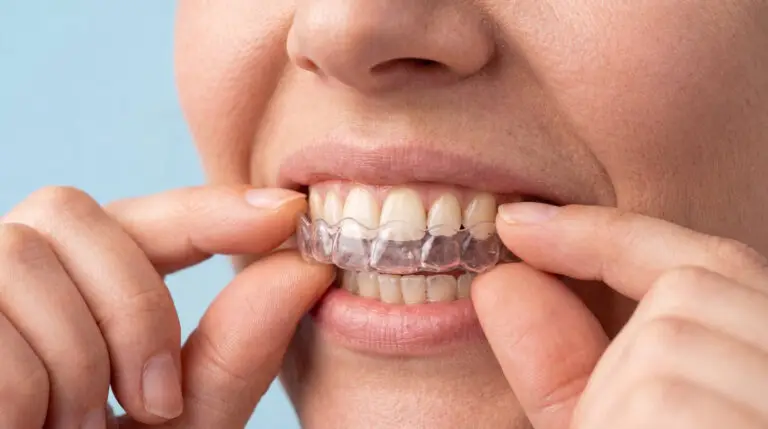
Plenty of checkups end with nothing more than a scheduling reminder. When something does need attention, the options are broad. Practices in the North Wales area list preventive care, checkups and cleanings, wisdom teeth removal, implants, root canals, crowns, bridges, and cosmetic treatments, along with clear aligner options such as Invisalign. Follow-up care is generally booked as its own appointment so there is enough time to do the work properly.
If a problem falls outside what your dentist handles in-house, expect a referral to a specialist. That is normal and not a sign that something has gone wrong. It simply means the right person is being matched to the job.
Emergency Visits Are a Different Kind of Appointment
A checkup and an emergency visit are not the same thing, and it helps to know the difference before you need it. If you have severe or throbbing pain, facial swelling, a tooth that has been knocked out or badly broken, or bleeding that will not stop, you are not looking for a routine appointment. You are looking for the soonest available slot.
Local practices advertise that they handle a full range of dental emergencies and will schedule patients in as soon as possible. Call rather than waiting for an opening to appear online. A brief description of what happened helps the person on the phone judge how quickly you need to be seen. Many offices also accept new patients specifically for emergency care, so an established relationship is not always required to be seen.

How Often Should You Schedule a Checkup
There is no single number that fits every mouth. Your interval depends on your gum health, your history of cavities, whether you smoke, whether you take medications that dry your mouth out, and how well your home care is holding up. Many offices suggest a visit roughly every six months for patients with stable oral health, while people with active gum disease or a recent restoration may be seen more often. Your dentist will tell you what they recommend and why. If the recommendation differs from what you expected, ask what changed.
Insurance, Payment, and Questions to Ask Ahead of Time
Costs vary widely based on the procedure, your specific plan, and the office you visit, so there is no useful blanket figure to quote here. Before treatment begins, it is reasonable to ask for a written estimate, to confirm whether a procedure is covered as preventive or restorative, and to find out what your estimated out-of-pocket amount would be. Some practices in the area advertise that they accept most insurance plans, and some offer free consultations, but you should verify the details directly with any office you are considering, along with your own insurer.
A few questions worth asking on the phone or at the front desk:
- Is this visit covered as a routine checkup under my plan?
- What will I owe after insurance for the recommended treatment?
- Are payment plans or financing options available?
- What happens if I decide to wait on this treatment?
Choosing a Dental Office in North Wales, PA
The right fit usually comes down to practical details. Is the office close enough that you will actually show up? Does it accept your insurance? Are new patients being scheduled, and how far out? How does the office handle emergencies if you call with a problem on a Friday afternoon? Does the team offer the services you are likely to need, or will you be referred out frequently?
Availability and comfort matter as much as credentials. Some local offices emphasize gentle techniques, family-friendly scheduling, and modern equipment, and several are open to new patients right now. Visit the website, read recent reviews, and call with your specific questions before you book. A short conversation with the front desk tells you a lot about how the practice operates day to day.
Once you are booked, the checkup itself is straightforward: update your history, let the dentist examine your teeth and gums, get a professional cleaning, and talk through anything that needs attention. Walk out knowing your next appointment date and what, if anything, you are watching. That combination is what keeps small issues small.
Frequently Asked Questions
Does a dental checkup hurt?
For most people a routine checkup is uncomfortable at worst. You may feel scraping, pressure, and cold water during the cleaning, especially around sensitive areas or if it has been a while since your last visit. That is different from actual pain. Tell the team about sensitivity before they start, since they can adjust their technique or discuss comfort options for any treatment that follows.
How long does a dental checkup take?
Timing depends on whether you are a new patient, whether X-rays are needed, and how much cleaning your teeth require. A first visit with a full health history and imaging generally runs longer than a routine recall. The office can give you a realistic time estimate when you book, and asking for one helps you plan your day around the appointment.
Can I book a checkup if I have not seen a dentist in years?
Yes, and you are far from alone in that situation. Practices in the North Wales area describe themselves as accepting new patients, and no one is keeping score of how long you have been away. Be honest about your history so the team can plan enough time. Long gaps often mean more than one cleaning appointment rather than a single long one.
Do I need X-rays at every checkup?
No. Dentists decide based on your symptoms, your history of decay, and how recently you had images taken. Some patients go several visits between sets, while others need them sooner because of a specific concern. If you are pregnant or had imaging done elsewhere recently, say so, since that can change what is recommended.
What should I bring to my first appointment?
Bring a photo ID, your dental insurance card, and a current list of medications and supplements you take. A written list of questions helps you remember what you wanted to ask once you are in the chair. If you have records or X-rays from a previous dentist, bring those too, though the new office may take its own images.