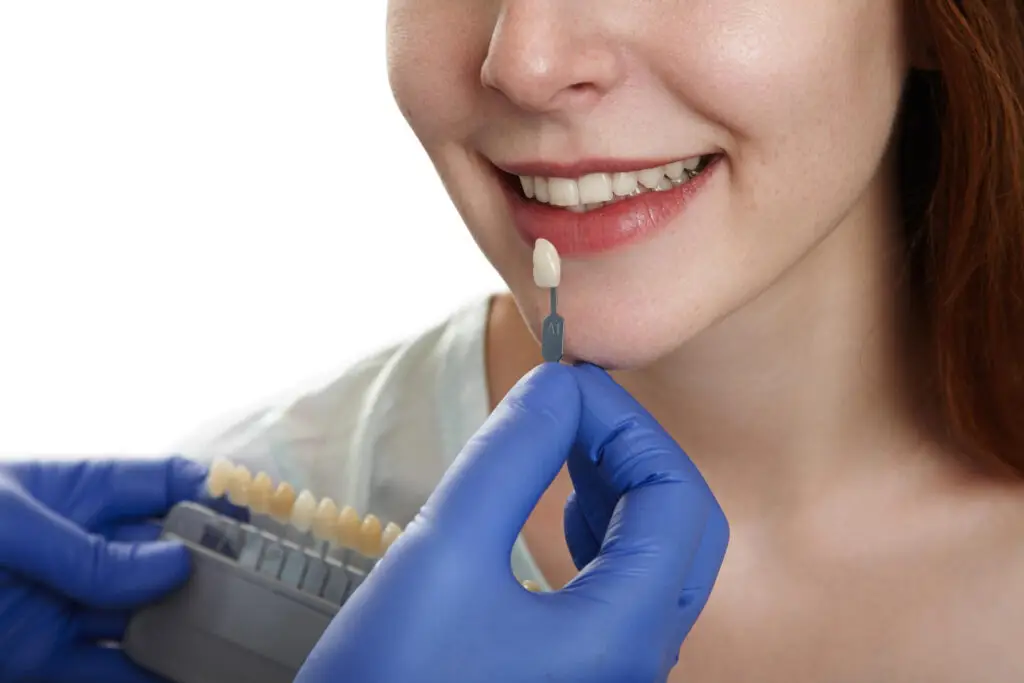
Two treatments dominate conversations about improving the look of front teeth: composite bonding and porcelain veneers. Both can change the shape, size, or color of a tooth, and both are offered as cosmetic options. The similarities thin out once you compare the material involved, how much of the natural tooth is affected, how long the result lasts, and what each approach costs.
Front teeth carry the most visual weight in a smile. They are also the teeth most likely to show a chip, a small gap, or discoloration that whitening does not correct. Choosing between bonding and veneers is rarely about picking an overall winner. It is about matching the treatment to the tooth sitting in front of the dentist.
How the Two Treatments Differ
Composite bonding is a non-invasive cosmetic treatment. A tooth-colored resin is applied to the surface of the teeth, then shaped and polished to create a more natural, uniform appearance. It closes small gaps and covers chips and discoloration, and it suits healthy teeth that need fine-tuning rather than rebuilding.
Porcelain veneers are thin ceramic, glass-like restorations. Each one is custom made as a shell that fits over the front of a tooth, and a resin cement forms a strong bond between the veneer and the tooth beneath it. Underneath all of this sit enamel and dentine, the natural layers of the tooth that any cosmetic treatment has to work with.
The practical difference follows from those descriptions. Bonding adds material to a tooth. Veneers cover the front of a tooth with a fabricated shell. One is a repair technician’s approach, the other is closer to upholstery, and the right choice depends on what the tooth actually needs.
Side-by-Side Comparison
| Feature | Composite bonding | Porcelain veneers |
|---|---|---|
| Material | Tooth-colored resin | Thin ceramic, glass-like shell |
| How it is applied | Resin applied to the tooth surface, then shaped and polished | Custom-made shell bonded to the tooth with resin cement |
| Best suited to | Minor chips, small gaps, discoloration, quick touch-ups, healthy teeth that need fine-tuning | Stronger bite forces, cosmetic concerns across multiple teeth, longer-term changes |
| Typical lifespan | About 3 to 7 years | 10 to 15 years or more with proper care |
| Stain resistance | Lower than porcelain | Higher than composite |
| Relative cost | More affordable | Higher |
| Invasiveness | Less invasive | More involved than bonding |
Composite Bonding: Best for Small, Targeted Changes
Bonding tends to be the more proportional response when the problem is minor. Small chips, slight gaps, and patches of discoloration on one or two front teeth are typical cases. It also works well for quick touch-ups, and it can suit patients who need a temporary improvement rather than a permanent one.
Because the resin is added to the surface rather than replacing the front of the tooth, bonding is considered the less invasive of the two options. That matters for a tooth that is otherwise healthy and simply needs a small correction. Common situations where bonding fits well include:
- A small chip on the edge of a front tooth
- A slight gap between two front teeth
- Discoloration that has not responded to whitening
- A quick touch-up before a wedding, interview, or photograph
- Cases where a short-term result is enough
Bonding is not a universal solution, though. It is described by dentists as great in the right case, which is another way of saying it has limits. A tooth with heavy wear, a difficult bite, or widespread cosmetic problems across several teeth is usually not the right candidate.
Veneers: Better Control for Larger Goals
Veneers are often the stronger recommendation when bite forces are heavier or when several teeth need cosmetic work at the same time. Porcelain is stronger than composite, more stain resistant, and usually lasts longer. It also gives a dentist more control over color, shape, and symmetry across a row of teeth, which is the deciding factor when the goal is a coordinated change rather than a single repair.
Staining behavior is worth thinking about early. Porcelain resists pigment better than composite resin, so patients who drink a lot of coffee, tea, or red wine may find that veneers hold their color longer. Bonding can pick up pigment over time and may need polishing or replacement sooner as a result.
How Long Each Option Lasts
Typical lifespan figures place dental bonding at roughly 3 to 7 years, while porcelain veneers can last 10 to 15 years or more with proper care. Those are ranges rather than guarantees. Real results depend on the individual tooth, the bite, and how well the work is maintained between visits.
Maintenance looks different for each treatment. Bonding may need polishing, repair, or replacement when it chips or dulls. Veneers need the same daily care as natural teeth, plus regular dental checks so the margins and the cement bond stay sound. Anyone comparing quotes should treat longevity as one factor among several rather than the only measure of value.

Cost and Invasiveness
Composite bonding is the more affordable and less invasive route. Veneers cost more because each one is a custom-made ceramic restoration, and the fee generally rises with the number of teeth involved and the complexity of the case. Exact fees vary between practices and are best confirmed in writing after an examination rather than estimated from general figures.
Invasiveness is the other half of that comparison, and it often matters more than money. Bonding leaves healthy tooth structure largely untouched, which is why it can be used as an intermediate step. Veneers involve more of the tooth by design, so they are usually reserved for cases where the extra control and durability justify the commitment.
Why the “One Is Better” Question Misses the Point
Dentists tend to frame the choice around the tooth, not the treatment. Bonding may be the most proportional answer to a small chip or a slight gap, while veneers may give better control when the concern is larger or spread across several teeth. Walking in committed to one option before an examination is the fastest route to a result that does not suit the tooth in question.
A sensible conversation starts with what is actually wrong: is this a cosmetic detail or a structural problem, how many teeth are involved, and how much tooth structure is healthy enough to keep. The answers usually make the decision for you.
Questions Worth Asking at a Consultation
Come prepared, and the appointment will do more work for you. Useful questions include:
- Which teeth genuinely need treatment, and which are healthy?
- Is this a minor cosmetic issue or something structural?
- How long should I expect the result to last in my specific case?
- What happens if bonding chips or discolors?
- What maintenance will each option require?
- What is the total fee, in writing, for the teeth involved?
- Does my dental plan cover any part of the treatment?
A Note for Patients in North Wales
North Wales, PA is served by local practices that offer cosmetic and general dentistry, and patients here face the same bonding versus veneers decision as anyone else. Pure Smile Dentistry in North Wales provides cosmetic, general, pediatric, restorative, and prosthodontic dentistry alongside Invisalign clear aligners, so a consultation is the natural place to have your own front teeth assessed.
Ask which of the two treatments the dentist recommends for your teeth, and why. A recommendation that explains the reasoning, the expected lifespan, and the maintenance involved is a far better guide than a general comparison found online. Verify fees, coverage, and any treatment timeline directly with the practice before committing.
Frequently Asked Questions
Is it better to get bonding or veneers?
There is no single answer, because the two treatments solve different problems. Bonding suits minor cosmetic issues such as small chips, slight gaps, and quick touch-ups on healthy teeth. Veneers suit heavier bite forces and cosmetic concerns spread across multiple teeth, where porcelain’s strength, stain resistance, and longer lifespan justify the extra cost and involvement.
Why do some people say dentists discourage veneers?
It is not accurate as a blanket statement. Dentists routinely recommend veneers when a case calls for them, particularly when several teeth need coordinated changes. What dentists often resist is using veneers for a problem that a less invasive option could solve just as well, such as a single small chip that bonding could address in a healthy tooth.
How much do bonding and veneers cost?
Composite bonding is the more affordable option, and veneers cost more because each one is custom made. Exact fees depend on the number of teeth treated and the complexity of the case, and they vary between practices. Request a written estimate after an examination, and ask whether your dental plan covers any portion of the treatment.
What are the downsides of dental bonding?
Bonding lasts roughly 3 to 7 years, noticeably less than porcelain veneers at 10 to 15 years or more with proper care. Composite resin is less stain resistant than porcelain, so it can dull over time, and it may chip and need repair or replacement. It is best reserved for minor corrections rather than major rebuilding.
Can I switch from bonding to veneers later?
In many cases, yes. Bonding is often used as a short-term or intermediate step, and a dentist can assess the tooth later and recommend veneers if the cosmetic goal changes or the bonding wears out. The right sequence depends on how much healthy tooth structure remains, so confirm the plan with your dentist before starting either treatment.