

Tooth pain can affect your sleep, eating habits, and everyday activities. When the pain is caused by an infected or damaged tooth, root canal treatment can help remove the infection while preserving your natural tooth. For residents looking for root canal treatment in North Wales, PA, understanding the procedure, its benefits, and what to expect can make the treatment process feel more manageable.
At Pure Smile Dentistry, root canal therapy is part of comprehensive general dentistry services designed to address a range of dental concerns. If you are experiencing persistent tooth pain, sensitivity, or discomfort while chewing, an evaluation can help determine the cause and whether root canal treatment is right for you.
What Is Root Canal Treatment?
Root canal treatment is a dental procedure used to treat an infected or inflamed pulp inside a tooth while helping preserve the natural tooth. The pulp contains nerves, blood vessels, and connective tissue. When it becomes affected by deep decay, cracks, or repeated dental procedures, it can lead to pain, sensitivity, and other dental concerns.
During root canal therapy, the dentist removes the affected pulp, cleans and shapes the inside of the tooth, and seals it to help prevent further infection. By treating the source of the problem, root canal treatment can help relieve discomfort and maintain normal chewing function while avoiding extraction when the tooth can be saved.
Signs You May Need a Root Canal
Certain symptoms may indicate that the pulp inside a tooth is infected or damaged. Common signs include:
- Persistent or severe tooth pain
- Sensitivity to hot or cold
- Pain while biting or chewing
- Swollen or tender gums
- Tooth discoloration
- A recurring bump or pimple on the gums
- Deep tooth decay or a crack
These symptoms do not always mean you need a root canal. A dental examination can determine the cause and recommend the right treatment.
Why Save Your Natural Tooth?
Dentists emphasize saving natural teeth whenever possible. A preserved tooth maintains the natural bite, keeps neighboring teeth stable, and avoids the need for more involved replacement options. When a tooth is removed, the surrounding teeth may drift into the empty space, which can lead to bite problems and additional wear over time.
Root canal therapy addresses the source of the pain while allowing you to keep your tooth. Many patients worry that the procedure will be uncomfortable, but modern techniques and anesthesia have made the experience far more manageable than its reputation suggests. Root canal therapy addresses the source of the pain while allowing you to keep your natural tooth. Modern techniques and anesthesia can make the procedure more comfortable for most patients, helping ease concerns about discomfort during treatment.
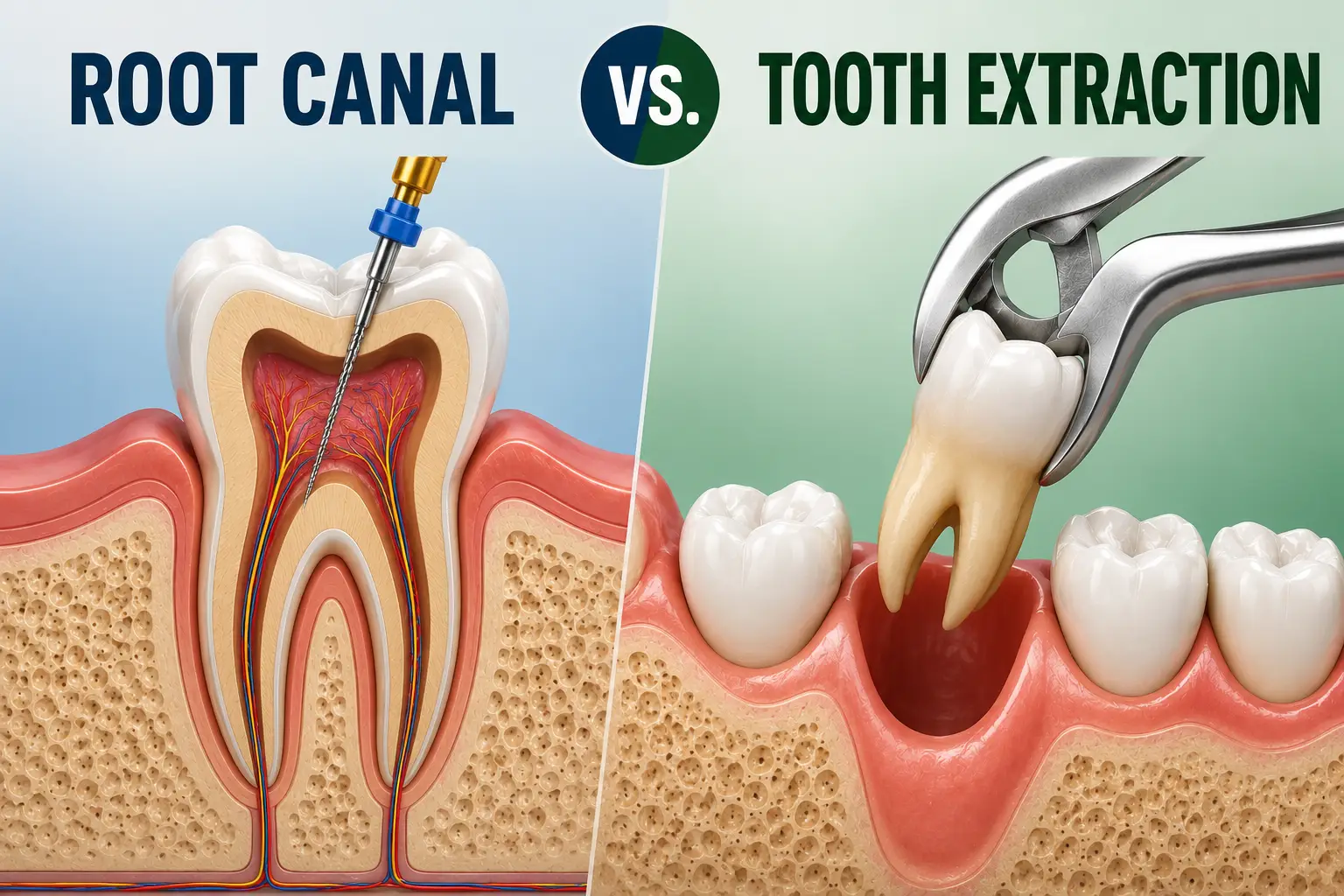
Root Canal vs. Tooth Extraction
What to Expect During Root Canal Therapy
Your visit for root canal treatment typically begins with an examination and x-rays to confirm the source of the problem. The dentist numbs the area to keep you comfortable during the procedure. After accessing the interior of the tooth, the infected pulp is removed, and the canals are cleaned and shaped. The tooth is then filled and sealed to protect it from future infection.
Some North Wales practices advertise same-day root canals, meaning the entire procedure can be completed in a single appointment. For more complex cases, a dentist may refer you to an endodontist, a specialist who focuses exclusively on diagnosing and treating issues inside the tooth. Endodontic offices often use advanced tools to make the treatment more precise, including digital radiography, operating microscopes, ultrasonics, and Nickel-Titanium instruments.
What Is Recovery Like After a Root Canal?
After a root canal, you may experience some mild tenderness or sensitivity for a few days. Following your dentist’s care instructions can help support a smooth recovery. Avoid putting excessive pressure on the treated tooth until your final restoration is completed.
If your dentist recommends a crown or other restoration, completing it as advised can help protect the treated tooth and restore normal function. If you experience severe or persistent pain, swelling, or other unusual symptoms, contact your dentist for further evaluation.
General Dentists vs. Endodontists
Both general dentists and endodontists can perform root canal treatment. General dental practices often incorporate root canal therapy into their broader range of services, which includes routine cleanings, emergency dental care, dental implants, and other restorative procedures. This can be convenient for patients who want to manage multiple aspects of their dental health in one location.
Endodontists, on the other hand, dedicate their practice exclusively to endodontic care. They see a high volume of root canal cases and invest in specialized equipment to handle complex anatomy and challenging infections. For straightforward root canals, a general dentist is perfectly capable. If your dentist identifies unusual canal structure, persistent infection, or other complications, they may recommend a specialist referral to give you the best chance of saving the tooth.
Patient reviews in the North Wales area frequently mention modern equipment and professional, kind staff. One local endodontic practice is described as having state-of-the-art facilities and an excellent doctor-patient rapport, which speaks to the quality of care available near North Wales.

Is Root Canal Treatment Right for You?
Persistent tooth pain, sensitivity to hot or cold, swelling, or discoloration of a tooth can all signal the need for evaluation. Only a dentist can determine whether root canal therapy is the appropriate course of action. Early treatment is almost always easier than waiting, since an untreated infection can spread and lead to more serious oral health problems.
If you are concerned about discomfort, talk to your dentist before the procedure begins. Anesthesia, modern instruments, and professional technique make root canal treatment a routine procedure for most patients. The immediate relief from pain is one of the most commonly reported benefits, and keeping your natural tooth supports your long-term oral health.
Frequently Asked Questions
Is a root canal painful?
Most patients find root canal treatment more comfortable than expected. Local anesthesia helps numb the area during the procedure, while modern techniques are designed to minimize discomfort. Many patients also experience relief once the source of the tooth pain is treated.
Can a root canal be completed in one visit?
Depending on the condition of the tooth and the complexity of the infection, a root canal may sometimes be completed in one appointment. Your dentist can determine the appropriate treatment schedule after examining your tooth.
How long does a root canal take?
The time needed for a root canal depends on the tooth being treated and the complexity of the case. Your dentist can provide a more specific estimate after an examination.
What is the difference between a dentist and an endodontist?
A general dentist provides a wide range of dental services, including root canal treatment. An endodontist specializes in diagnosing and treating problems affecting the inside of the tooth and may be recommended for complex cases.
Conclusion
Root canal treatment can relieve tooth pain, address infection, and help preserve your natural tooth. If you are experiencing persistent pain, sensitivity, swelling, or discomfort while chewing, Pure Smile Dentistry can help determine the cause and recommend the right treatment. Don’t let ongoing tooth pain affect your daily life. Contact Pure Smile Dentistry today to learn more about root canal treatment and take the next step toward a healthier, more comfortable smile.