
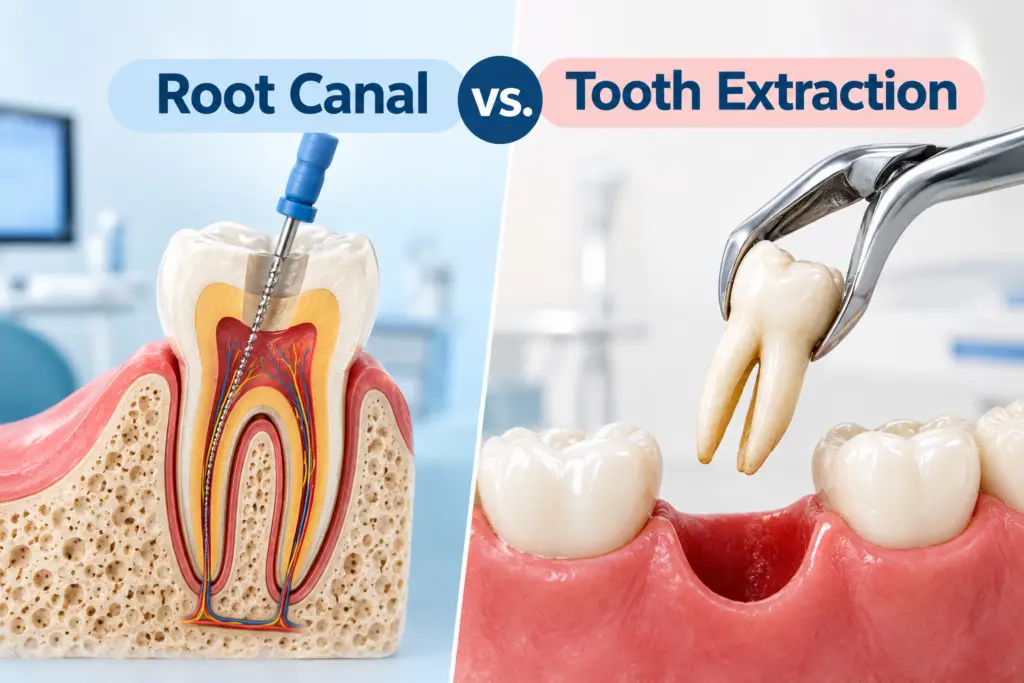
When a tooth becomes severely damaged or decayed, many people assume the tooth must be removed. In reality, a damaged tooth does not always have to come out. Root canal therapy in North Wales can often bypass extraction, treat the infection, and relieve pain while keeping your natural tooth intact.
The comfort level, the total cost, and the long-term outcome of each option deserve careful thought before you decide. A root canal leaves your natural tooth in place. An extraction removes the tooth and leaves a space that may need further dental work. Comparing the two procedures side by side makes the decision clearer.
Understanding Root Canal Therapy
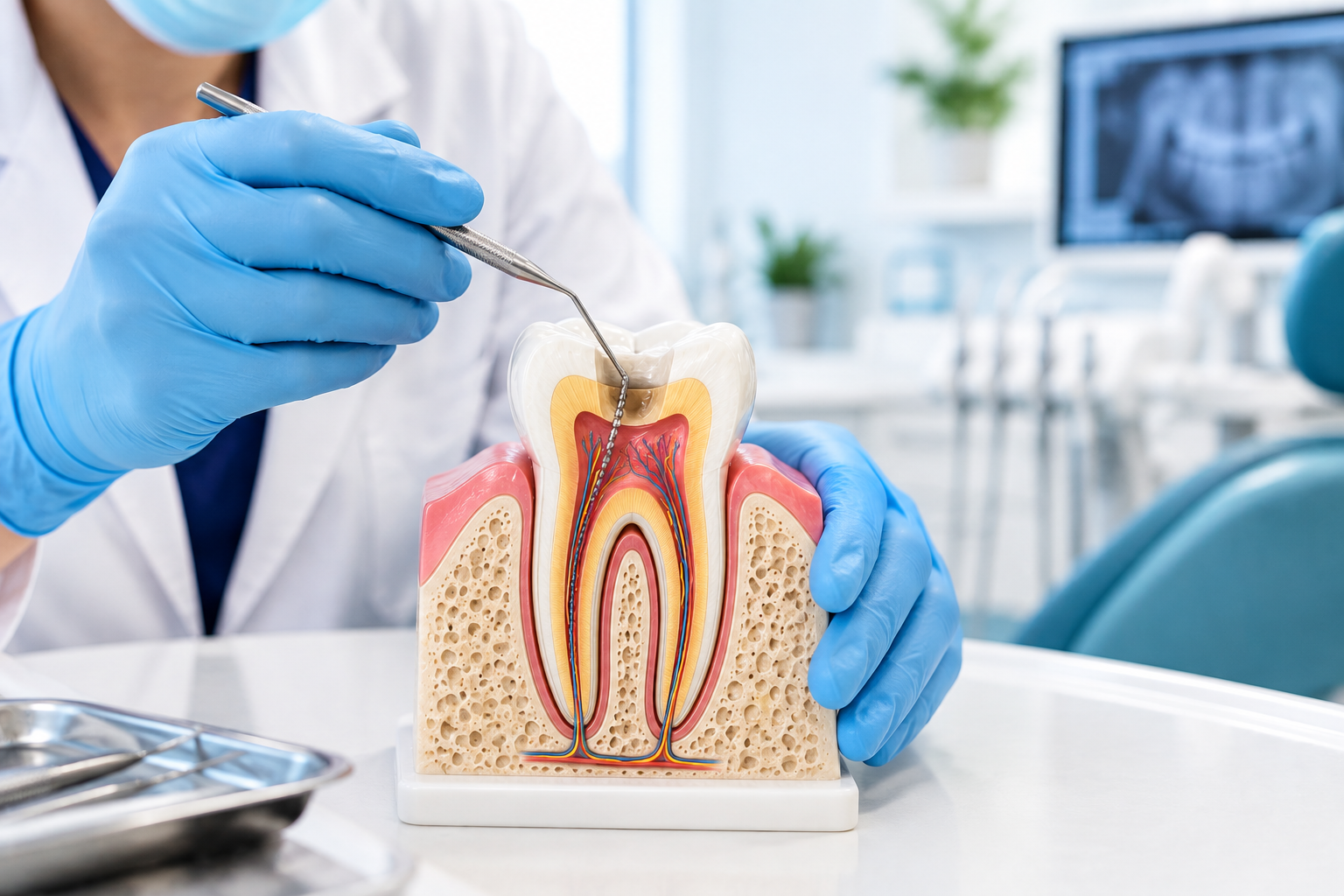
A root canal involves gently removing the nerve tissue from inside the tooth and sealing the canals with a special rubberlike material. When decay, a crack, or an injury exposes the inner pulp to bacteria, the tooth can become infected and painful. Removing that nerve tissue treats the problem at its source and allows the tooth to remain in your mouth.
Root canal therapy is recommended for two main groups of patients:
- Patients with broken or cracked teeth that extend into the tooth pulp
- Individuals with deep cavities that reach the inner pulp of the tooth
For these situations, a root canal can resolve infection, pain, and sensitivity while restoring the strength and function of the tooth. The goal is to save the natural tooth instead of replacing it.
Understanding Tooth Extraction
Tooth extraction is the complete removal of a tooth from the mouth. It may be the appropriate choice when the tooth is too damaged or decayed to be restored. Extraction removes the source of the problem, and the pain from the tooth goes away with it. However, the procedure also creates an empty space that must be considered.
A severely damaged or decayed tooth does not always have to be extracted. Many teeth that look unsalvageable can still be treated with a root canal. When a tooth can be saved, extraction is not the only answer, and keeping the natural tooth may lead to a better long-term result.
Signs a Tooth May Need Treatment
Broken or cracked teeth that extend into the pulp can cause infection, pain, and sensitivity. Deep cavities can also reach the inner pulp and produce similar symptoms. You may notice these warning signs:
- Pain or tenderness in the affected tooth
- Sensitivity in one specific tooth
- A visible crack, chip, or break
- Deep decay that has reached the inner layer of the tooth
Some teeth that need root canal therapy do not cause obvious discomfort at first. When damage or pain appears, it is best to have the tooth evaluated early so the infection does not become worse.
Key Differences at a Glance
The table below summarizes the main comparison between root canal and extraction.
| Consideration | Root Canal | Tooth Extraction |
|---|---|---|
| What it does | Removes nerve tissue and seals the canals | Removes the entire tooth |
| End result | Healed natural tooth remains | Empty space is left behind |
| Pain and comfort | Alleviates tooth pain from infection | Often a larger and more uncomfortable procedure |
| Cost over time | Usually less expensive than extraction with replacement | Cost of filling the space adds to the total |
| Time commitment | Less time-consuming than extraction plus a bridge | Often followed by another procedure |
The clearest difference is the final outcome. A root canal treats the problem, leaving you with a healed natural tooth. Tooth extraction removes the problem, leaving you with an empty space. That space may affect your chewing and may require a separate replacement procedure later.
Which Option Is More Comfortable?
Pain is the first concern most patients raise. Root canal therapy is intended to alleviate tooth pain, not cause more of it. The procedure removes the nerve tissue that is creating the discomfort, so many patients feel relief shortly after the infected material is gone.
Extraction, by comparison, is a larger procedure and is often more uncomfortable than a root canal. Removing the entire tooth disturbs more tissue, which can make recovery harder. Dentists who use gentle techniques and advanced equipment can help you stay comfortable in the dental chair regardless of which option you choose.
Cost Comparison: Root Canal vs Extraction in North Wales
Cost plays a central role in the decision. Root canal treatment, along with an appropriate restoration, is a cost-effective way to treat an infected tooth because it is usually less expensive than extraction followed by replacement. Root canals are far cheaper and less time-consuming than the combination of extraction and a dental bridge.
An extraction alone can seem more affordable at first, but that figure does not include the replacement tooth. Once the gap is filled with a bridge or another restoration, the total expense can be higher than a root canal. A dentist in North Wales can give you a clear estimate after examining your tooth and discussing your options.
Dental prices vary by practice and by insurance plan, so a personalized estimate is more useful than a general number. Ask your dentist to explain what is included in each quote before you decide.
Saving Your Natural Tooth for the Long Term
Root canals treat the problem, leaving you with a healed natural tooth. Tooth extractions remove the problem, leaving you with an empty space. Keeping your natural tooth means you can chew normally and you do not need a separate procedure to replace anything.
Because of these benefits, root canal therapy is described as a long-term solution to save your tooth. It is less expensive than extraction followed by a bridge, and it takes less time to complete the whole process. Many patients who choose a root canal avoid the extra cost and follow-up care that come with replacement.
When Is Extraction the Better Option?
Extraction is justified when the tooth is so badly damaged that it cannot be restored. If not enough healthy tooth structure remains to support a filling or other restoration, saving the tooth may not be realistic. In those cases, removing the tooth eliminates the source of infection and pain.
When extraction is chosen, the next question is how to fill the empty space. The dentist can discuss replacement options and explain how each one affects your bite, your budget, and your overall oral health.
How a Dentist Helps You Decide
The decision starts with a dental examination. The dentist checks whether a crack or cavity reaches the pulp, how much healthy tooth remains, and whether infection is present. These factors determine whether root canal therapy can successfully save the tooth.
Your preferences matter in the final decision. Some patients feel strongly about preserving their natural tooth. Others prefer to remove a tooth that has caused ongoing problems. A conversation with your dentist in North Wales can clarify the risks, benefits, and expected outcomes of each choice.
Frequently Asked Questions
Here are answers to common questions when comparing root canal vs extraction.
Is a root canal better than a tooth extraction?
A root canal is usually the preferred option when the tooth can be saved. Root canal therapy treats the problem and leaves a healed natural tooth, while extraction leaves an empty space that often needs to be replaced. Root canal treatment with proper restoration is also less expensive and less time-consuming than extraction followed by a dental bridge.
Does getting a root canal hurt?
Root canal therapy is designed to relieve tooth pain, not cause it. The procedure gently removes the infected nerve tissue that is the source of the discomfort. By comparison, tooth extraction is a larger procedure and is often more uncomfortable than a root canal. Dentists use gentle techniques and advanced equipment to keep patients comfortable during treatment.
Can I ask for extraction instead of a root canal?
You can share your preference for extraction with your dentist, but it may not be the only realistic option. Many severely damaged or decayed teeth can still be saved with root canal therapy, so extraction is not always required. The right decision depends on the condition of the tooth and your long-term goals. Ask your dentist to explain both options before choosing.
Which option costs less, a root canal or an extraction?
Root canal treatment, along with an appropriate restoration, is usually less expensive than extraction followed by replacement. It is also less time-consuming than extraction with a dental bridge. An extraction alone can seem cheaper at first, but the empty space it leaves usually needs additional dental work to fill. For residents of North Wales, PA, ask your dentist for a detailed cost estimate.
Conclusion
Choosing between a root canal and tooth extraction depends on your tooth’s condition and your long-term oral health goals. If the tooth can be restored, root canal therapy may preserve your natural smile, restore function, and prevent replacement needs. Extraction may be necessary when damage is too severe. A professional evaluation is the best way to determine the right treatment.
Experiencing pain, sensitivity, decay, or a cracked tooth? Contact Pure Smile Dentistry today to schedule an evaluation with a trusted North Wales, PA dentist. Our team will explain your options and help protect your comfortable, healthy smile.