
A tooth coming out is often harder on the parent than on the child. The appointment itself takes minutes, but the days that follow decide how comfortable your child feels and how smoothly the socket heals. Knowing what the first hours should look like, which foods are safe, and how long the whole thing usually takes removes most of the guesswork.
Below is a practical rundown of baby tooth extraction recovery, built around what pediatric dentists and hospital guidance consistently recommend to families. Your child’s own dentist will always have the final word on their specific case, so treat these points as a companion to the instructions you were given at the office.
What the First 24 Hours Look Like
Immediately following the extraction, your child may experience mild swelling, discomfort, or slight bleeding. All three are expected and, in most cases, manageable at home. The single most useful thing you can do on day one is keep your child resting rather than running around.
Food and drink matter just as much as rest. Make sure your child drinks plenty of liquids and eats only very soft, healthy foods for the first 24 hours. Think yogurt, applesauce, mashed potatoes, smooth soups that are not too hot, and similar spoon-friendly options. Hard, crunchy, or chewy foods can irritate the socket and are best saved for later in the week.
A simple first-day checklist helps:
- Keep your child home, calm, and resting rather than active.
- Offer plenty of fluids, but nothing carbonated.
- Stick to soft, healthy foods only.
- Elevate your child’s head to help with swelling.
- Use pain relief as directed by your dentist or pharmacist.
A Rough Recovery Timeline
Reported healing windows vary depending on which tooth came out and how involved the extraction was. A baby tooth is generally a faster recovery than a permanent tooth, and a simple extraction is faster than a surgical one. Published guidance describes the following stages.
| Stage | What parents usually see |
|---|---|
| First 24 hours | Mild swelling, discomfort, or slight bleeding; rest, fluids, and soft foods only |
| First three days | Regular pain relief may be needed; keep activity gentle |
| Days three to five | No straws, no spitting, and no carbonated drinks |
| Overall healing | Primary teeth commonly settle in about one to three days, permanent teeth may take up to two weeks, simple extractions typically heal in seven to ten days, and surgical extractions can take up to three weeks |
Those timeframes overlap rather than compete. A child whose baby tooth came out may feel normal within a couple of days while the gum underneath is still quietly closing over. What matters is the trend: steady improvement rather than a socket that seems to be getting more irritated.
Foods and Drinks That Help Healing
Soft foods are not just a comfort measure. Chewing on the wrong side or crunching into something hard can disturb the clot that protects the healing socket, and that clot is the foundation of a smooth recovery.
Good options for the first day or two include yogurt, pudding, applesauce, mashed vegetables, scrambled eggs, and lukewarm soups. As your child feels better, you can slowly reintroduce normal textures, but keep meals gentle for a few days and avoid anything that requires serious chewing near the extraction site.
Drinks deserve their own rules. Pediatric guidance is consistent here: skip carbonated drinks, because the bubbles can dislodge clots. Straws are off the table as well. Sucking on a straw creates pressure inside the mouth that can pull a clot loose, so no straws and no spitting for at least three to five days.
Managing Pain and Swelling at Home
Your child may need regular pain relief for at least three days after the extraction. Regular pain relief such as paracetamol is usually enough on its own, and stronger medication is rarely necessary for a straightforward baby tooth removal. Always follow the dosing instructions you were given, and check with your dentist or pharmacist before combining anything.
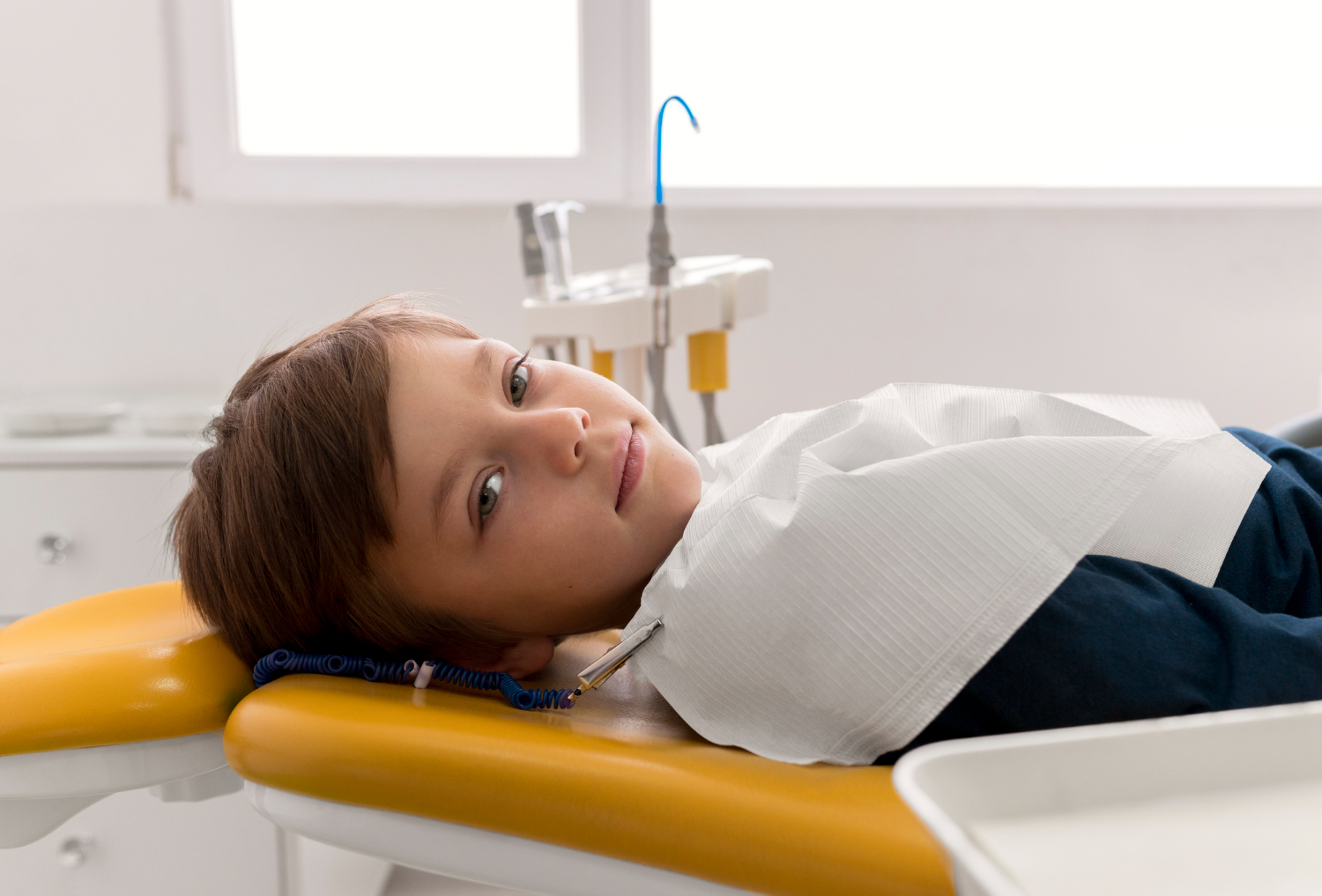
Swelling responds best to rest and positioning. Dentists recommend that your child rests for at least 48 hours after the extraction, and elevating your child’s head during that window helps keep swelling in check. A stack of pillows or a reclined seat on the sofa works well. If the swelling concerns you at any point, call the dental office rather than waiting it out.
Protecting the Clot: Activity Limits That Matter
Resistance to slowing down is normal in kids, especially once the numbness wears off and they feel fine. The problem is that the clot sealing the socket is fragile in the early days. Exercise, lifting, and even bending over can dislodge a protective clot, which is why the recommendation to rest is not just about comfort.
A workable approach is to plan low-key activities for the first two days. Board games, drawing, movies, and reading all fit the brief. Gym class, recess roughhousing, swimming, bike riding, and contact sports should wait until your child’s dentist clears them. If your child has a scheduled practice or game, ask the dental office when it is safe to return rather than guessing.
Gentle Rinsing and Oral Hygiene
Keeping the mouth clean helps healing, but the technique matters more than the effort. Gentle rinsing is encouraged, while vigorous swishing is not, because aggressive rinsing can dislodge the clot you are trying to protect.
For the rest of the mouth, continue normal brushing but keep the bristles away from the extraction site for the first few days. Have your child brush the other teeth as usual, then let them rinse gently rather than forcefully. If your dentist gave you specific rinsing instructions, such as a saltwater rinse starting on a particular day, follow that schedule instead of improvising.
Following Your Dentist’s Instructions Closely
The most repeated piece of advice in pediatric aftercare guidance is also the simplest: follow the aftercare instructions your child’s dentist provides. Every extraction is a little different. A wiggly baby tooth that came out in seconds does not need the same care plan as a surgical removal, and only the treating dentist knows which situation applies.
Keep the written instructions somewhere visible for the first few days, and call the practice if anything seems off. Asking a question early is far easier than dealing with a complication later, and dental teams expect those calls.
Frequently Asked Questions
How long does baby tooth extraction recovery take?
Recovery for a primary, or baby, tooth typically takes about one to three days before a child feels back to normal, while permanent teeth can take up to two weeks. Separately, simple extractions are described as healing in roughly seven to ten days, and surgical extractions may take up to three weeks. Feeling better and full gum healing are two different clocks.
How long will my child need pain relief?
Your child may need regular pain relief for at least three days after the extraction. Regular pain relief such as paracetamol is usually enough for a baby tooth removal, provided you follow the dosing instructions supplied by your dentist or pharmacist. If discomfort seems to be getting worse instead of easing, contact the dental office.
Can my child use a straw after an extraction?
No. Dentists advise no straws and no spitting for at least three to five days after an extraction. Sucking through a straw creates pressure that can pull the protective clot out of the socket, which slows healing and can lead to more discomfort. Offer an open cup or a sippy-free cup instead, and skip carbonated drinks during the same window.
When can my child go back to sports and gym class?
Plan on at least 48 hours of rest, and keep exercise, lifting, and bending over off the schedule during that time, since all three can dislodge the protective clot. After that, ask your child’s dentist when it is safe to resume gym, swimming, and contact sports. Their answer depends on which tooth was removed and how the extraction went.
What should my child eat on the first day?
Stick to very soft, healthy foods for the first 24 hours and make sure your child drinks plenty of liquids. Yogurt, applesauce, mashed vegetables, and lukewarm soups all work well. Avoid crunchy, chewy, or spicy foods, and keep carbonated drinks out of the rotation until the socket has had several days to settle.
Conclusion
Baby tooth extraction recovery is usually straightforward when your child gets plenty of rest, soft foods, gentle oral care, and the right pain relief. Keep an eye on the extraction site and follow your dentist’s instructions throughout the healing period. If your child has persistent bleeding, increasing pain, significant swelling, or anything that seems unusual, contact your dentist promptly.
If your child needs a baby tooth extraction or you have questions about recovery and aftercare, Pure Smile Dentistry can help. Contact the dental team today to schedule an appointment and get personalized guidance for your child’s needs.